


Monastery of Agia Triada | Vrontou
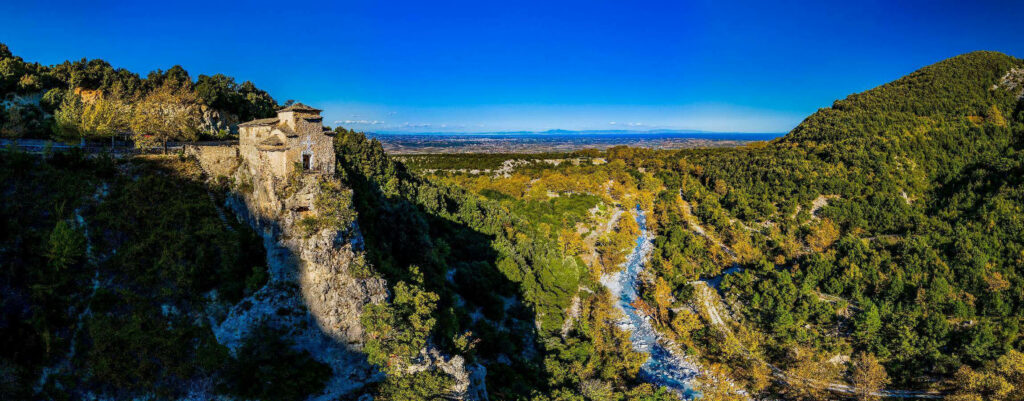
In a rocky cavern, near the monastery of Agia Triada in Vrontou, there is the chapel of Agia Kori, where there is also a spring-holy water, surrounded by an impressive scenery of shady trees.
Enipeas Gorge
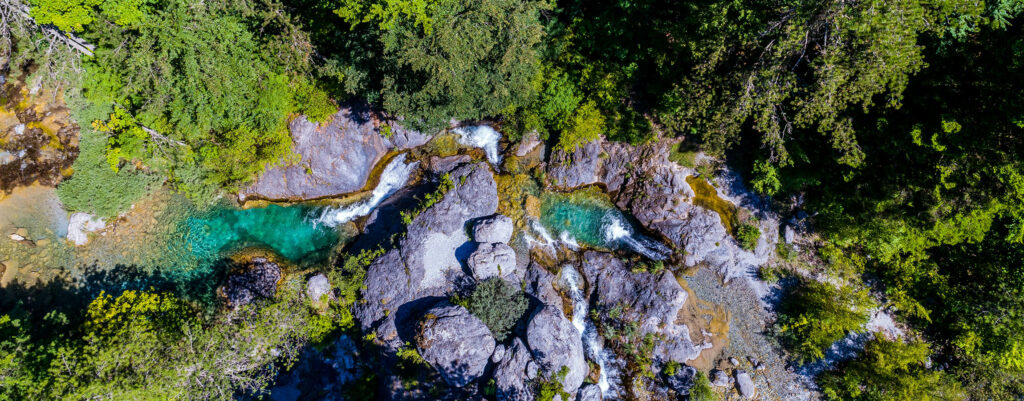
The Enipeas canyon, the largest of mount Olympus, combines imposing rocks with spring tides and woods.
The Enipeas riverbed carries abundant water throughout the year. According to the ancient Greeks, the Pimpleids muses use to live in its bed and on its woody sides. They were named after the town of Pimpleia, which the archaeologists situate at the beginning of the gorge.
Rapsani
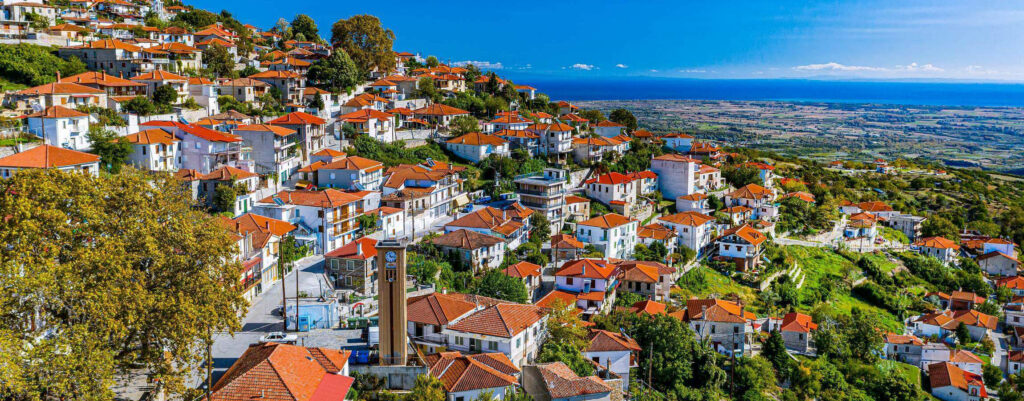
On the national Athens – Thessaloniki highway, right after the valley of Tempi, we come to a sign in front of the railway station building that reads Rapsani. The road snakes up and meets Rapsani at an altitude of 640m.
The village is built on the south-eastern slopes of kato Olympus, at a location bathed in sunlight throughout the day. The village’s unique position, its clear and digestive waters and cool climate have made it a very popular summer resort. The paved square of Rapsani with its plane trees, mulberries and linden trees offers a view of Tempi is filled with small traditional cafes and shops selling tsipouro and, of course, the famous Rapsani wine.
Cave of Agios Dionysios
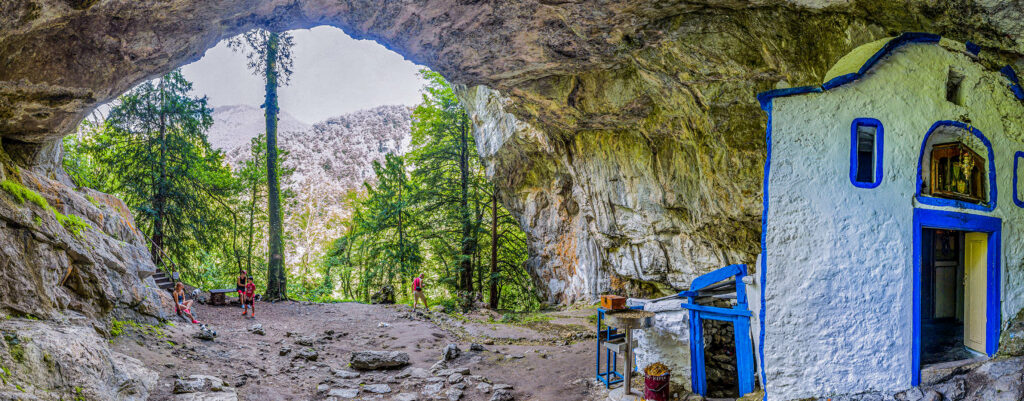
Following Ε4 and leaving behind Palaia Moni, the monastery of Agios Dionysios, we reach Holly Cave, the saint’s hermitage, visited by many pilgrims within a year.
Ithakisios cave
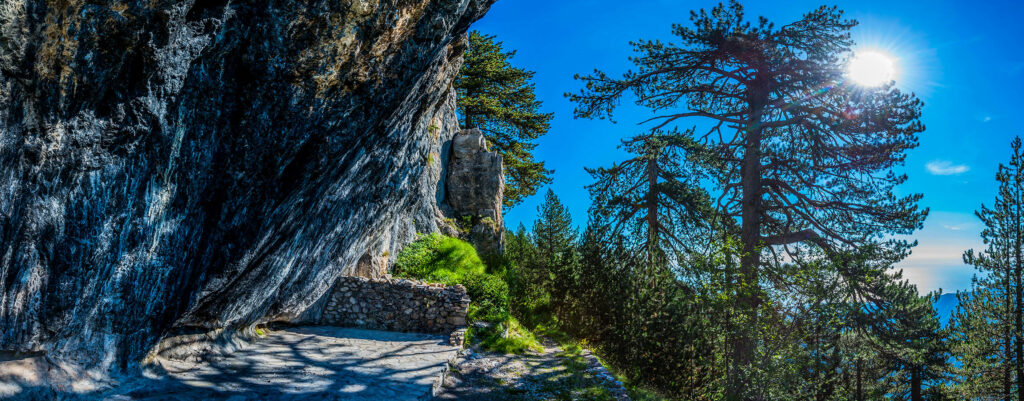
Ithakisios grotto. In this rock cavity, at a height of 1,680 metres lived before the war for 20 summers, the painter Vasilis Ithakisios who died in 1977 in a nursing home in Athens. He lived from the paintings of the landscapes of the worshiped mountain which he sold to the mountaineers.
Naoum caves

One of the routes towards the Megala Kazania sets off from Kokkinoplos, one of the highest in altitude villages of Mt. Olympus (1.150 meters). Once there, one can follow the dirt road towards Xerolaki which leads to the Naoum caves. These are pit-caves formed on the mountain’s slopes, which can be used as emergency shelters during severe weather.
