


Krevatia Vrontou Refuge
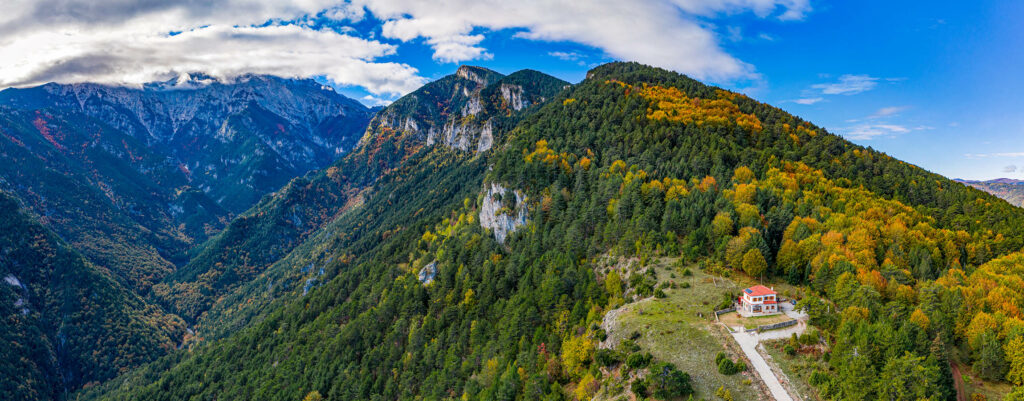
It’s located on the northern side of Mt. Olympus, on the upper side of the plateau, at an altitude of 1.005 meters. It can house up to 20 persons and also features a restaurant. The view from the refuge is breathtaking, while its location serves as a starting point for hiking, mountain biking and climbing. It can be accessed either by car from Vrontou, or on foot from Agioi Apostoloi (a small chapel next to the offices of the Mountaineering Club of Vrontou).
Koromilia Refuge | Dion

This is one of the newest refuges on Mt. Olympus. Located at Koromilia of Dion at an altitude of 1.020 m, it can house up to 16 persons and is accessible by road.
Giosos Apostolidis Refuge
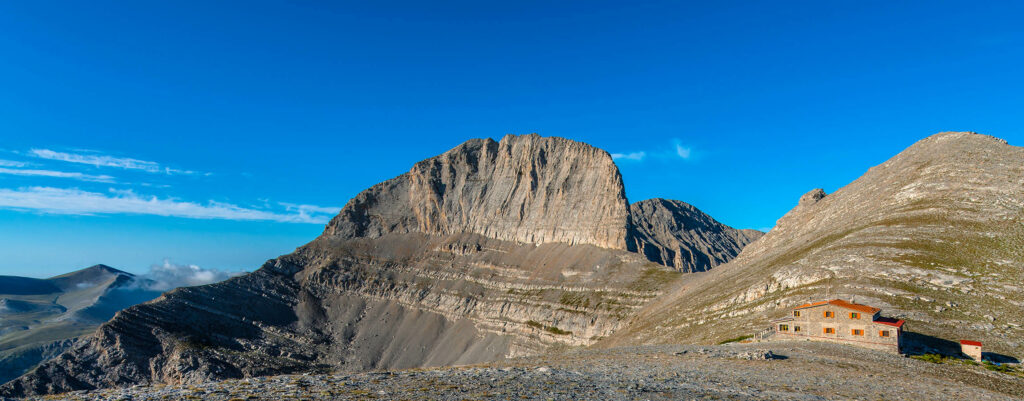
Located on the Muses plateau, at an altitude of 2.697 m, it constitutes the starting point for conquering Mytikas, the highest peak of Mt. Olympus, and the peaks Profitis Ilias and Stefani. Climbing enthusiasts can enjoy their favorite adventure on the steep slopes of Stefani and Skolio. The refuge can host up to 80 persons, featuring a fully-organized kitchen, restaurant, lounge with fireplace, enclosed balcony with sofas and tables on the upper floor, landline phone and toilets. The shelter’s water is not drinkable, yet bottled water is available from the kitchen. During the winter season, the refuge’s outside area remains open in order to serve as an emergency shelter.
Bivouac Kostas Migotsidis | Vrysopoules
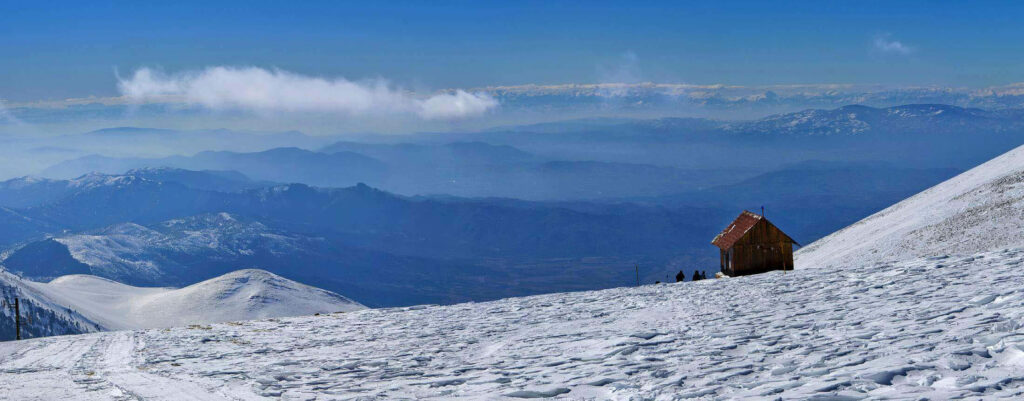
This is an emergency refuge, located at an altitude of 2.360 meters. It’s situated after the “Vrysopoules” refuge, at the end of the Military Alpine Combat and Ski Training Center (KEOAX) lift. Its central location offers access to the trails on the mountain’s western side towards the center and the highest peaks of Olympus. It has a nine-bed capacity, including a space heater and wireless radio.
Archaeological Museum of Dion
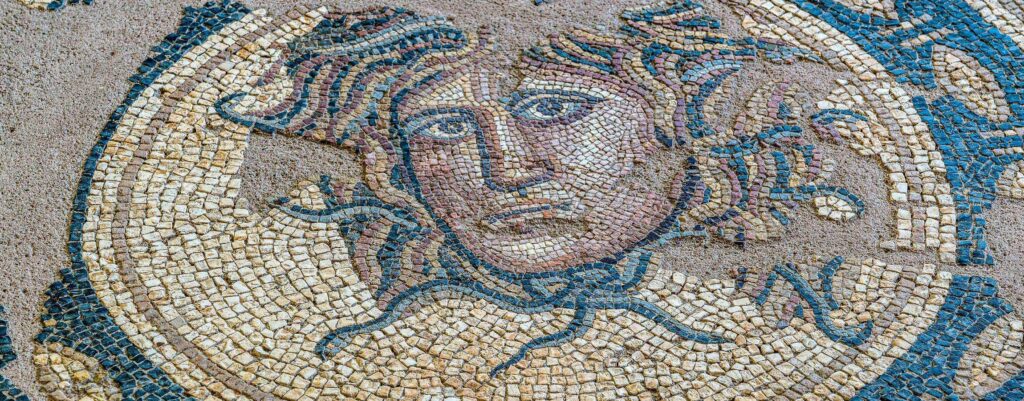
The Archaeological Museum of Dion, inaugurated in 1983, offers a thorough picture of the daily life and culture of the inhabitants of ancient Dion, from the Iron Age (1000-700 BC) to the early Christian centuries. The exhibits originate from the archaeological area of Dion and the wider area of Pieria. The three rooms of the museum feature grouped exhibits such as statues, tomb sculptures, architectural members, inscriptions, vessels, mosaics, coins and other items found mainly in the wider area of Dion. In the spacious ground floor, there are findings from the Roman baths and the sanctuaries of Demeter and Isis. The visitor can also admire an exquisite finding dating to the 1st century BC, a unique musical instrument of antiquity, the famous hydraulis (water organ) of Dion, brought to light during archaeological excavations in 1992. The bronze tubes of the instrument and the entire sound-producing system have survived.
Ancient Theatre of Dion
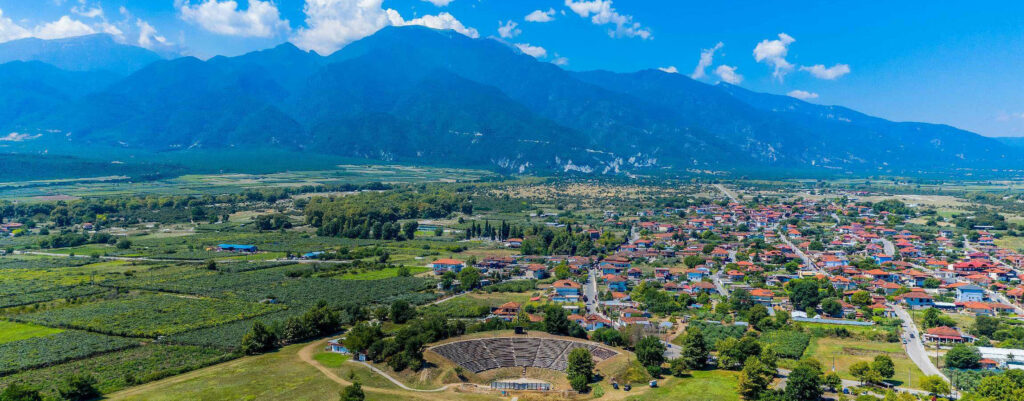
The theater of Dion was built during the Hellenistic years, on the same premises of a rudimentary theater built during the reign of Archelaos (5th century b.C.) The seat rows were made of brick and the floor of the orchestra was made of beaten earth, while the stage and the backstage were made of marble. The theater was deserted near the end of the 2nd century BC. Today, the historical theater has been renovated with modern seats and is utilized for cultural events and the Olympus Festival.
