


Folklore museum of Livadi
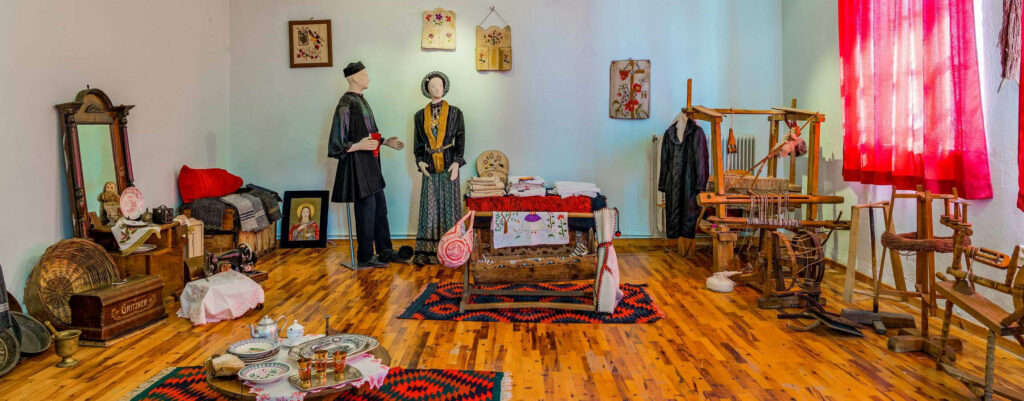
The Folklore Museum of Livadi contains numerous artifacts, old tools, photographs and objects reflecting the locals’ daily life.
Monastery of Agia Triada | Livadi
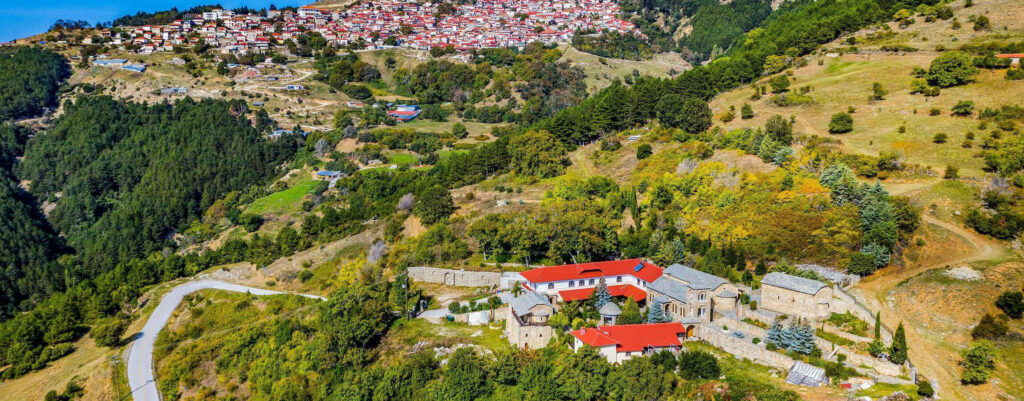
The Monastery of the Holy Trinity is situated near the village Livadi. The chapel of Agios Charalampos is an aisleless church with a gable roof and was renovated in 1761.
Agia Triada-Sparmos monastery
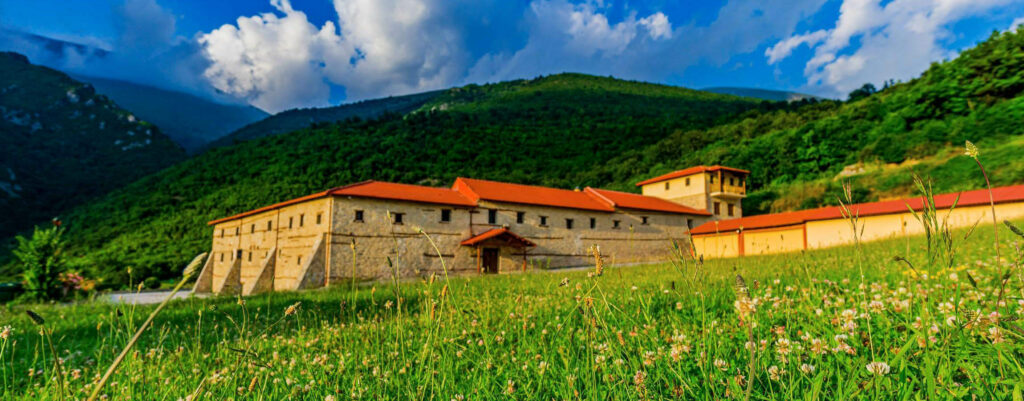
The Sparmou Monastery is situated on the slopes of Olympus and was built in the 16th century. In the 18th century it had about 150 monks and a huge estate. Its katholikon is a small aisleless basilica with a narthex dedicated to the Holy Trinity and adorned with lovely murals from the 19th century.
Castle of Platamonas
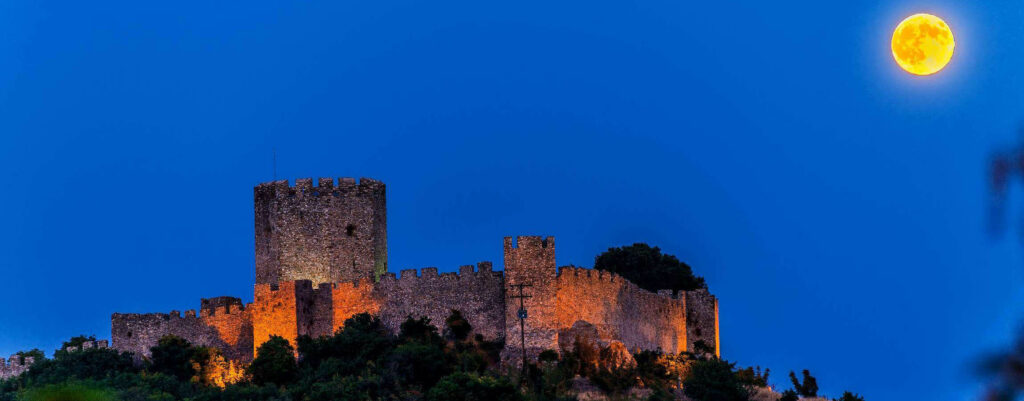
Platamon Castle, dating back to the mid-Byzantine period (10th century), was built over the grounds of the ancient city of Heraklion and was restored by the Franks after 1204, the Byzantines during the 14th century, and the Turks.
It is one of Greece’s best-preserved castles consisting of a defensive stone-wall and an octagonal fortress tower. Recent excavations have revealed a Byzantine church, dating between the 10th and the 11th century, houses belonging in the same period, an 18th century chapel, as well as storage spaces and a part of the wall from the Hellenistic period (2nd century B.C.)
Controlling the passages of Olympus towards southern Greece, Platamon Castle was targeted by many foreign conquerors, but, also, by Greek revolutionists during 1821. It is open to visitors during the hours provided for archaeological monuments. During summer, it hosts many of the events organized within the context of the Olympus Festival.
Dion archaeological park
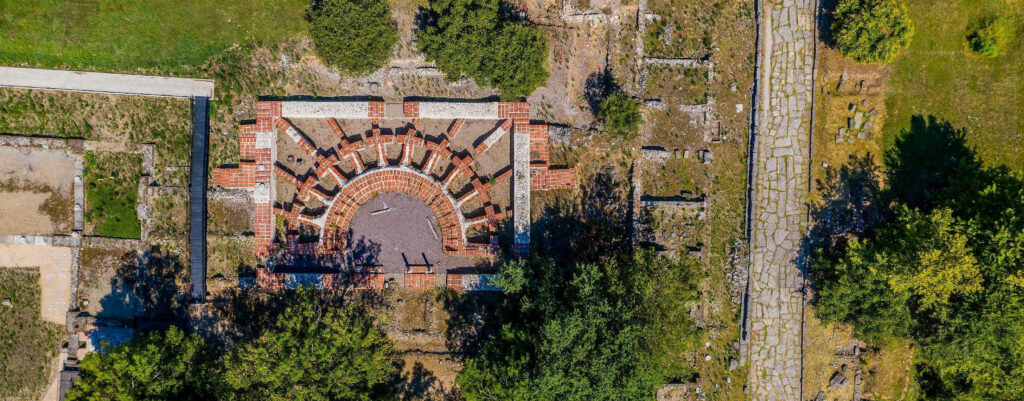
The archaeological site of Dion is one Greece’s most significant regions, as it is rich in antiquities, featuring streams gushing through ancient stones, a swift-water river Vafiras and lush vegetation with shady trees. A visit to the monumental ruins of Dion which belong to the Hellenistic,Roman and early Christian periods, is not only a visit to the historical past of a Macedonian city with an excellent, grid-like city plan of horizontal and vertical roads; it is also a trip of recreation through an archaeological park surrounded by natural beauty.
Archaeological site of Azoros
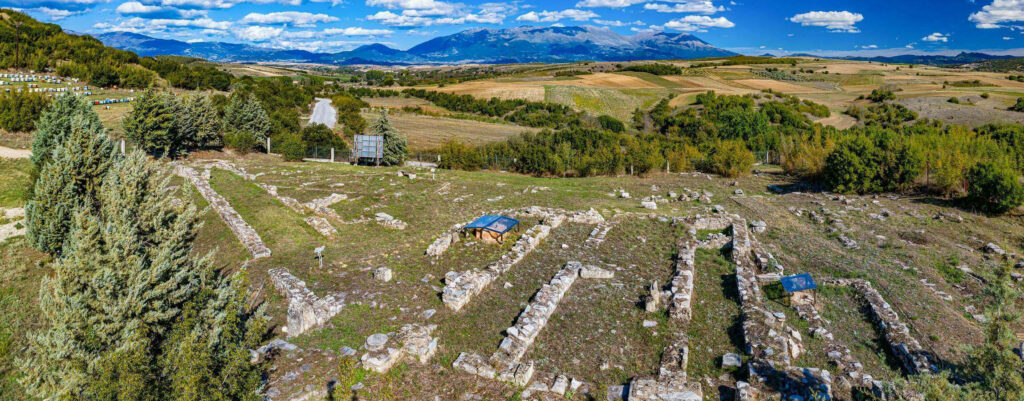
The excavations in Azoros began in October 1995. The wall, unearthed by the excavations, is one of a kind as polygonal stones were used for its construction. In the same spot, the tomb of a woman holding a baby was, also, discovered. Aside of tombs, other findings brought to light were public buildings and an important Byzantine cemetery with a cross-shaped church. Kastri peak, just above the excavation area, was the acropolis of the ancient city. Two Paleo-Christian basilicas have been found, one at the acropolis of Agios Athanasios and the other, dating back to the 7th century, at Palaiokklisi.
